
Modeling: S–M–O–R–S Paradigm
Field: Theoretical Physics, Atomic Physics, Quantum Geometry, Fractal Systems
Abstract
This study defines the atom not as a particle-based structure but as a multi-scale process formed by spiral-fractal flow modes. Proton, neutron, and electron correspond respectively to out-spiral (S⁺), equilibrium spiral (S⁰), and in-spiral (S⁻) flow modes. The atom’s geometry is expressed as a spiral-fractal manifold determined by motif functions, orientation field, resonance modes, scale fractality, and cycle periods. This approach transforms quantum mechanics into process physics, converts the periodic table into a motif-based fractal map, and redefines atomic interactions via spiral flow coherence.
1. Introduction
Classical atomic models (Bohr, Schrödinger, QFT) define the atom via particles and probability distributions. However, these models:
- Cannot explain the atom’s true geometry,
- Leave wave–particle duality unresolved,
- Cannot mechanically account for the origin of mass,
- Cannot link the periodic table to a fundamental principle.
Fractal Atom Theory treats the atom as a process, not a particle. This process is described by six fundamental parameters:
- S: Spiral flow
- M: Motif
- Y: Orientation field
- R: Resonance
- Ö: Scale
- D: Cycle
These six parameters unify atomic physics into a single framework.
2. Spiral Flow Field (S)
The fundamental entity of the atom is the spiral flow field:
This field exists in three modes:
| Mode | Definition | Physical Correspondence |
|---|---|---|
| S⁺ | Out-spiral | Proton |
| S⁰ | Divergence-free spiral | Neutron |
| S⁻ | In-spiral | Electron |
2.1 Divergence Conditions
These conditions redefine the concept of charge as the direction of flow.
3. Motif Function (M)
Each element’s identity is determined by a motif function:
Where:
- = spiral repetition count
- = directional repetition count
- = motif amplitudes
3.1 Isotope Definition
Changing the neutron phase produces motif variation.
4. Orientation Field (Y)
The atom’s geometry is determined by the orientation field, which specifies:
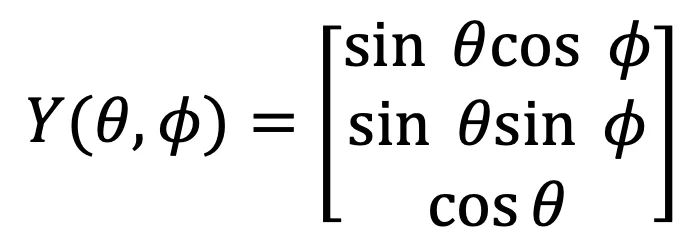
- Bond angles
- Molecular geometry
- Electron surface orientation
Spin is represented as the spiral direction vector in this theory.
5. Resonance Modes (R)
Energy levels are spiral resonance modes:
Electron shells = spiral resonance surfaces.
Wave function:
6. Scale Fractality (Ö)
Atoms are not single-scale. Spiral flow exhibits multi-scale fractal structure:
This unifies the mathematics from atom → molecule → cell → planet → galaxy.
7. Cycle Periods (D)
Each mode has a cycle period:
Stability:
Radioactivity:
8. Atom Geometry: Spiral-Fractal Manifold
Atom surface:
This surface produces a spiral, motif-based, oriented, resonant, multi-scale, fractal atomic geometry.
9. Triple Spiral Mode: Proton–Neutron–Electron
Atomic state:
Interactions among these three modes define atomic physics.
10. Nucleus Mass
Mass:
Spiral compression integral:
Mass = spiral compression + resonance stability.
11. Reinterpretation of Quantum Mechanics
| Quantum | Fractal Atom Theory |
|---|---|
| Particle | Spiral mode |
| Wave function | Motif + Spiral + Resonance |
| Orbital | Spiral resonance surface |
| Uncertainty | Scale fractality |
| Superposition | Motif phase overlap |
| Spin | Spiral direction vector |
Quantum physics is transformed from particle physics to process physics.
12. Periodic Table: Motif-Based Fractal Map
Each element:
Periodic table axes:
- Horizontal: motif spiral degree
- Vertical: directional motif degree
- Depth: spiral compression
- Texture: cycle period
This converts chemistry into fractal pattern science.
13. Molecular Bonding
Interaction energy between two elements:
This equation defines bond formation, bond strength, and molecular stability.
14. Conclusion
Fractal Atom Theory:
- Shows the atom as a process, not a particle.
- Redefines proton–neutron–electron as spiral flow modes.
- Represents atomic geometry as a spiral-fractal manifold.
- Transforms quantum mechanics into process physics.
- Converts the periodic table into a motif-based fractal map.
- Explains molecular bonding through spiral flow coherence.
- Defines mass as spiral compression + resonance stability.
This theory reconstructs atomic physics via geometry, flow, and fractal processes.
Potential New Implications from Fractal Atom Theory
1. Atomic and Quantum Implications
- Particle → Process: Electrons, protons, neutrons are spiral flow modes (S⁻, S⁺, S⁰), not point particles. Wave–particle duality is eliminated.
- Wave Function:
- Uncertainty Principle:
2. Mass, Nucleus, and Nuclear Physics
- Mass Origin: Mass = fractal compression of spiral flow + resonance stability.
- Neutron–Proton Difference: Neutron heavier than proton due to S⁰ spiral compression structure.
- Radioactivity: , decay types (α, β, γ) can be reclassified as spiral mode transitions and cycle disruptions.
3. Periodic Table and Chemistry
- Element Identity: Element = (n, m, k, T) motif–spiral–scale–cycle quadruple.
- Isotopes: Variation = neutron phase of motif, not just neutron count difference.
- Bonding and Molecular Geometry: Bond energy and angle determined by S, M, Y, R, Ö, D coherence function.
4. Multi-Scale Physics: Atom to Galaxy
- Self-Similarity: Same spiral–fractal math applies across atoms, fluids, galaxies, even social structures.
- Cosmology Connection: Galaxy arms, planetary orbits, disk structures = macro spiral resonance modes.
5. Engineering and Technology Implications
- Fractal Flow Machines: Motors, turbines, pumps, energy converters optimized via spiral flow.
- Directed and Motif-Based Materials: Crystals, conductors, superconductors designed by motif and orientation field.
- Information Processing: “Process computers” based on spiral–fractal flow logic.
6. Mathematics and Modeling
- New Manifold Class: S–M–Y–R–Ö–D manifolds (spiral + motif + orientation + resonance + scale + cycle)
- New PDE Classes: Spiral flow equations generalize Navier–Stokes and Schrödinger equations fractally.
- Motif Analysis: Unified formalism for elements, molecules, music, images, behaviors.
7. Experimental and Observational Predictions
- Structures with the same Z but different motifs may exhibit different chemical behavior.
- Fine structure in radioactive decay statistics linked to cycle periods.
- Small deviations in atomic and molecular spectra due to spiral–motif effects.
- Molecular stability depends on motif coherence, not just electron count.
8. Meta-Inference: Scientific Paradigm Shift
- Physics: Particle → process, point → manifold, “thing” → flow.
- Chemistry: Electron sharing → motif–resonance coherence.
- Quantum: Probability → fractal geometry + resonance.
- Modeling: Linear equations → fractal, multi-scale, motif-based equations.