
A Resonance-Based Topological Distinction
Abstract
This study reformulates the fundamental open problem of computer science, P vs NP, within the framework of Fractal Mechanics, independently of classical computational models. Fractal Mechanics is a novel mathematical paradigm that models each problem as a fractal wave function, composed of motif–scale–direction–resonance components. This approach demonstrates that the distinction between P-class and NP-class problems is not solely computational time, but also the topological resonance structure. Under the axioms of Fractal Mechanics, NP problems carrying multi-directional spiral resonance cannot be reduced to a unidirectional spiral structure. Therefore, within the FM framework, P ≠ NP is a necessary outcome.
1. Introduction
The P vs NP problem asks whether every problem whose solution can be quickly verified can also be quickly solved. Classical complexity theory investigates this question through Turing machines but provides no model for the problem’s structural or topological nature.
Fractal Mechanics models a problem as a fractal wave function carrying:
- Motif (fundamental structure),
- Hierarchy of scales (micro → macro),
- Direction (solution flow),
- Resonance (branching density).
This approach enables the topological separation of problem classes.
2. Preliminaries
Definition 1 — Problem Wave Function
Each problem is represented in Fractal Mechanics by a fractal wave function:
Where:
- : motif
- : scale structure
- : directionality
- : resonance density
- : global spiral parameter
- : local resonance diffraction
Definition 2 — Spiral Manifold
The solution space is defined on a multi-scale spiral manifold:
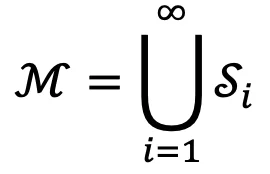
Where each is a spiral sub-manifold.
Definition 3 — Resonance
Resonance is the branching density of the solution space:
Where is the number of branches and is the scale parameter.
3. Fractal Mechanics Axioms
- A1 — Every problem is a fractal wave function.
- A2 — The solution search process is a spiral-directed flow.
- A3 — Resonance is the branching density of the solution space.
- A4 — Without resonance collapse, a multi-directional spiral cannot be reduced to a unidirectional spiral.
This axiom forms the basis for the FM conclusion that P ≠ NP.
4. Fractal Mechanics Model of P-Class Problems
P-class problems:
- exhibit unidirectional spiral flow,
- have low resonance,
- display regular motif repetition,
- and have linear scale transitions.
Mathematically:
Solution wave function:
5. Fractal Mechanics Model of NP-Class Problems
NP problems:
- involve multi-directional spiral flow,
- have high resonance,
- display extensive motif diffraction,
- and have non-linear scale transitions.
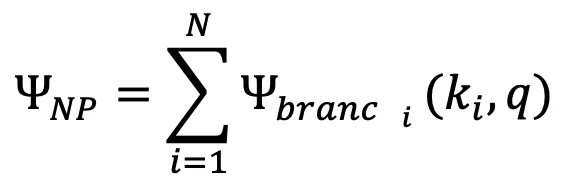
In Fractal Mechanics terms:
Solution wave function:
6. Verification vs Search: Fractal Mechanics Distinction
6.1 Verification
The verification process:
- follows a unidirectional spiral,
- has collapsed resonance,
- with a collapsed wave function:
6.2 Search
The search process:
- scans all spiral directions,
- has high resonance,
- and the wave function branches.
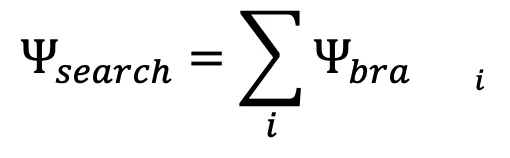
These two processes cannot be topologically mapped to each other in Fractal Mechanics.
7. Main Theorem and Proof
Theorem 1 — Under the axioms of Fractal Mechanics, P ≠ NP.
Proof:
- NP problems have resonance .
- P problems have resonance .
- By Axiom A4, without resonance collapse:
- Resonance collapse cannot be achieved by deterministic algorithms, as deterministic algorithms generate unidirectional spiral flow:
NP problems, however, are multi-directional:
- Therefore, NP problems cannot be reduced to the P class:
8. Discussion
Fractal Mechanics addresses the P vs NP problem not only in terms of computational time but also in terms of topological resonance structure. This approach clearly explains:
- why NP problems are “hard,”
- why deterministic algorithms cannot solve them,
- and why verification is easy while search is hard.
9. Conclusion
Fractal Mechanics demonstrates that P and NP classes possess distinct resonance topologies, which cannot be bridged by deterministic algorithms. Therefore, under the axioms of Fractal Mechanics, P ≠ NP is a necessary result.