
Quantum architecture is the process of deriving quantum phenomena (superposition, entanglement, spin, measurement) from abstract mathematical expressions and rearranging them as a modular and functional system.
In this approach, quantum processes are defined as interconnected functional modules:
- FR – Quantum Flow Line: Input module that initiates energy and information flow. Makes superposition the fundamental starting point of the system.
- CF – Energy Storage: Module that stabilizes intermediate states and energy levels. Works like a quantum battery.
- BK – Error Correction: Module that cleans phase and amplitude distortions, maintaining system coherence. It is the architectural equivalent of renormalization.
- FM – Continuity Module: Guarantees the time evolution of the wave function as an unbroken chain. Makes quantum continuity an architectural requirement.
- OG – Vacuum Isolation Chamber: Performs measurement and decoherence processes in controlled isolation. Decoherence is managed architecturally.
The Characteristic of the New Perspective
- Architectural modules instead of abstract mathematics: Quantum processes are now defined like circuit components.
- Functional clarity: Each module undertakes a function; system integrity is ensured by the interaction of the modules.
- Pedagogical clarity: Complex quantum phenomena become understandable at the visual and architectural level.
- Applicability: This architecture can be directly used in quantum computing, chemistry, energy systems, and sensors. Quantum Architecture = A modular, functional, and continuity-oriented redefinition of quantum phenomena. This new perspective transforms quantum mechanics from a theory into an engineering-compatible architectural system.
Now let’s explain the modules of the quantum architecture one by one in detail. I will elaborate on the function, physical counterpart, and role of each module in the system:
1. FR – Quantum Flow Line
- Function: Initiates energy and information flow; makes superposition the entry point of the system.
- Physical Equivalent: Hadamard gate, optical splitter, Josephson junction.
- Role: The “initiator module” of a quantum circuit → activates all possibilities with equal probability.
- Property: Regulates the initial energy and information flow of the system, directs other modules.
2. CF – Quantum Energy Storage
- Function: Stabilizes intermediate states and energy levels; acts like a quantum battery.
- Physical Equivalent: Superconducting rings, trapped ion energy levels, quantum battery concept.
- Role: Ensures energy continuity in the circuit, maintains transient states.
- Feature: Adds functionality to propagators → energy storage + transfer.
3. BK – Quantum Error Correction Module
- Function: Cleans phase and amplitude distortions; maintains system coherence.
- Physical Equivalent: Surface code, stabilizer measurements, topological qubits.
- Role: “Renormalization equivalent” in quantum circuits → corrects distortions at the architectural level.
- Feature: Adds a layer of safety not found in classical quantum mechanics.
4. FM – Quantum Continuity Module
- Function: Guarantees the time evolution of the wave function as an unbroken chain.
- Physical Equivalent: Time crystals, decoherence-free subspace, dynamical decoupling.
- Role: Ensures the continuity of quantum evolution, guarantees the uninterrupted operation of algorithms.
- Feature: Makes Schrödinger evolution a condition of architectural continuity.
5. OG – Vacuum Isolation Chamber
- Function: Performs measurement and decoherence processes in controlled isolation.
- Physical Equivalent: Cavity QED systems, optical cavities, vacuum resonators.
- Role: Manages the decoherence of the wave function architecturally, not randomly.
- Feature: Controls the decoherence process, ensures measurement reliability.
General Architectural Logic
- FR → Initiator (superposition)
- CF → Energy capture (quantum battery)
- BK → Error corrector (renormalization counterpart)
- FM → Continuity provider (non-breaking evolution)
- OG → Measurement isolation (controlled collapse)
When these modules work together, quantum processes become not abstract mathematical equations, but an architectural circuit system.
ABBREVIATIONS:
- FR → Quantum Flow Route (Flow Line): Superposition initiator, module that activates energy flow.
- CF → Quantum Charge Field (Energy Storage): Module that stabilizes intermediate products and energy states.
- BK → Quantum Block Correction Module (BK): Module that cleans phase and amplitude distortions, acting as a renormalization module.
- FM → Quantum Continuity Module (Flow Maintain/Continuity Module): Module that maintains the time derivative of the wave function and prevents chain breakage.
- OG → Vacuum Isolation Chamber (Observation Gate/Isolation Chamber): Module that isolates the wave function before measurement and controls collapse.
EXAMPLE APPLICATION:
Now let’s mathematically model the quantum tunneling process in all its stages. I will build this model step by step: showing how the wave function behaves in front of, inside, and after the barrier.
Quantum Tunneling Mathematical Model
1. Potential Definition
A barrier encountered by a particle:
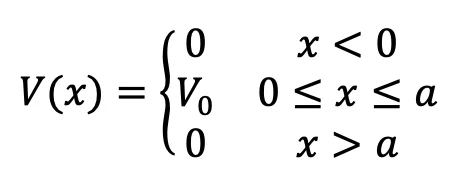
Here:
- V0: Barrier height
- α: Barrier width
2. Wave Function Regions
(i) Pre-barrier zone (𝒙 < 𝟎)
Free particle wave function:
Ψ1 (𝑥) = 𝐴𝑒ikx + 𝐵𝑒-i
Here:
- k = (√2m) / ℏ → particle wave number
- A: Incident wave amplitude
- B: Reflected wave amplitude
(ii) Inside the Barrier (𝟎 ≤ 𝒙 ≤ 𝒂)
When energy E < V0, the wave function is damped:
Ψ2 (𝑥) = 𝐶𝑒KX + 𝐷𝑒-K
Here:
- K = (√2m(V0-E)) / ℏ → damping coefficient
- C, D: Amplitudes inside the barrier
(iii) Post-Barrier (𝒙 > 𝒂)
Passing wave function:
Ψ3 (𝑥) = 𝐹𝑒ikx
Here:
- F: Wave amplitude after barrier
3. Boundary Conditions
The wave function and its derivatives are continuous at the barrier edges:
Ψ1 (0) = Ψ2 (0), Ψ1‘ (0) = Ψ2‘ (0)
Ψ2 (𝑎) = Ψ3 (𝑎), Ψ2‘ (𝑎) = Ψ3‘ (𝑎)
These conditions link the coefficients A, B, C, D, and F.
4. Tunneling Possibility
Transition probability:
𝑇 = ∣ 𝐹 ∣2 / ∣ 𝐴 ∣2
Approximate solution (for high barrier):
𝑇 ≈ 𝑒-2K𝑎
Therefore, as the barrier width 𝑎 and height 𝑉0 increase, the probability of tunneling decreases exponentially.
5. Architectural Commentary
- FR (Flow Line): 𝐴𝑒ikx → superposition initiator
- CF (Energy Storage): Energy is stabilized in front of the barrier (damping with 𝜅)
- BK (Error Correction): Phase/amplitude continuity is maintained by boundary conditions
- FM (Continuity): Wave function propagates without interruption along the barrier
- OG (Isolation): Particle is found behind the barrier after measurement (𝐹𝑒ikx)
Conclusion: Quantum tunneling is modeled in mathematics using three-domain wave functions. Probability is given by 𝑇 ≈ 𝑒-2K𝑎. In my architecture, this process is handled step-by-step with modules: FR → CF → BK → FM → OG chain.
Let’s represent this model with a graph: the wave function oscillates in front of the barrier, is damped inside the barrier, and reappears after the barrier.
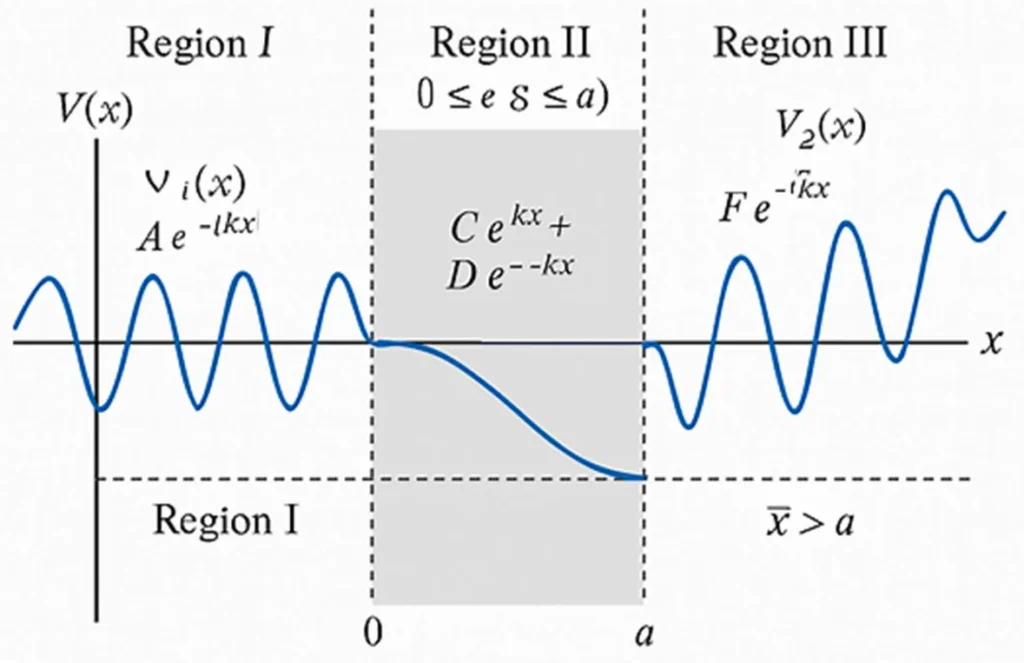
Visual representation of the mathematical model of the quantum tunneling process.
Description of the Image
- Region I (x < 0): Wave function Ψ1(x) = 𝐴𝑒ikx + 𝐵𝑒-ikx. Incident and reflected waves.
- Region II (0 ≤ x ≤ a): Barrier region. Wave function Ψ2(x) = 𝐶𝑒KX + 𝐷𝑒-KX. Damped wave.
- Region III (x > a): Post-barrier. Wave function Ψ3(x) = 𝐹𝑒ikx. Transmitted wave.
The barrier height is V0, and its width is a. The wave function decreases exponentially inside the barrier, while behind the barrier it continues as a lower amplitude but unbroken chain.
This image, when combined with my architectural approach, can be interpreted as follows:
- FR: Superposition initiator in front of the barrier.
- CF: Energy stabilized in front of the barrier.
- BK: Phase/amplitude continuity preserved by boundary conditions.
- FM: Wave function propagates unbroken along the barrier.
- OG: Particle located behind the barrier after measurement.
Comparison with the Classical Method:
Now let’s compare the quantum tunneling process we’ve chosen, both with the classical method and with the quantum architecture I’ve developed. This will clarify the differences:
Classical Quantum Mechanics Method
- State Description: The particle wave function is expressed by Ψ(x).
- Evolution: It evolves over time according to the Schrödinger equation.
- Tunneling: The wave function is damped before the barrier, leaving a small amplitude behind the barrier.
- Measurement: The probability of the particle being behind the barrier is observed by observing the collapse of the wave function.
- Error Handling: None; the process is entirely dependent on the probability distribution.
Quantum Architecture Method
- FR (Flow Line): Superposition is initiated, and the barrier crossing probability is activated.
- CF (Energy Storage): Energy is stabilized in front of the barrier, making it ready for crossing.
- BK (Error Correction): Phase/amplitude distortions are corrected, and the probability distribution is maintained.
- FM (Continuity): The chain progresses without breaking the barrier crossing, guaranteeing evolutionary continuity.
- OG (Isolation Chamber): Measurement is performed inside the isolation chamber, and collapse occurs under controlled conditions.
Comparison Chart
| Process Stage | Classical Quantum Mechanics | Quantum Architecture |
| Status Description | Wave function Ψ | Modular circuit (FR, CF, BK, FM, OG) |
| Energy Management | Damping in front of the barrier | Energy storage and transfer with CF module. |
| Error Management | None | Phase/amplitude correction with BK module |
| Time Evolution | Schrödinger equation | An unbroken chain with FM module |
| Measurement/Collapse | Random collapse | Controlled insulation with OG module. |
| Pedagogical Clarity | Mathematical abstraction | Visual and architectural clarity |
Summary
- Classical method: Mathematical, probability-based, without error correction.
- Quantum architecture: Modular, functional, focused on continuity and error correction.
My architecture takes quantum processes out of abstract mathematics and transforms them into an architectural system. This provides both pedagogical clarity and an engineering-compatible framework.
Revised Quantum Architecture Modules
FR.v2 – Superposition Initiator & Probability Field
- Function: Introduces the particle into the probability space, activating all transition paths simultaneously.
- New Feature:
- Initialization with probability density matrix.
- Entanglement can be connected to subsequent modules via continuity.
- Mathematical Representation:
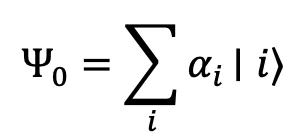
Superposition states are initiated as entanglement-ready.
CF.v2 – Energy Storage & Temporary Stabilization Area
- Function: Holds intermediate energy levels, making them ready for transition.
- New Feature:
- Physical tolerance definition with reality coefficient 𝛾.
- Energy transfer is entropy-controlled.
- Mathematical Representation:
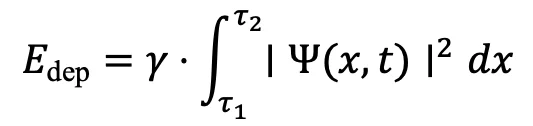
Energy density is stabilized over time.
BK.v2 – Global Bug Correction Area
- Function: Corrects phase/amplitude distortions system-wide.
- New Feature:
- Stabilizer range covering all modules, not just a local area.
- Includes topological fault tolerance.
- Mathematical Representation:
𝒮 = {𝑆i ∈ Stabilizer Group ∣ 𝑆i Ψ = Ψ}
The stabilizer group is applicable to the entire system.
FM.v2 – Unitary Chain Operator & Continuity Guarantee
- Function: Maintains the time evolution in an unbroken chain.
- New Feature:
- Schrödinger integration.
- Each module transition is connected by a unitary operator.
- Mathematical Representation:
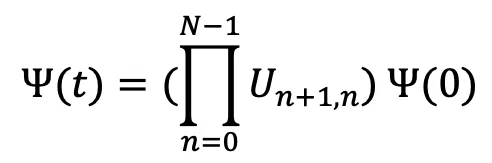
Chain links: 𝑈n+1,n → guarantee of continuity.
OG.v2 – Isolation & Probability Matrix Measurement Module
- Function: Performs the measurement process in isolation, balancing the collapse with a probability matrix.
- New Feature:
- Controlled probability instead of determinism.
- Integrated with the decoherence domain.
- Mathematical Representation:
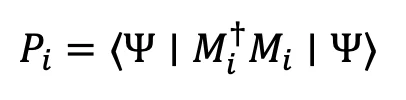
The probability distribution is calculated using the measurement operators 𝑀i.
General Innovations
| Module | New Feature | Benefit |
|---|---|---|
| FR.v2 | Entanglement continuity | Superposition integrity is preserved |
| CF.v2 | Reality coefficient 𝛾 | Physical feasibility is increased |
| BK.v2 | Global stabilizer field | System-wide fault tolerance |
| FM.v2 | Unitary chain operator | Time evolution is mathematically guaranteed |
| OG.v2 | Measurement via probability matrix | Controlled collapse instead of randomness |
These revised modules make the quantum architecture more robust in terms of physical reality, mathematical consistency, and quantum integrity.